Closing the Infrastructure Financing Gap: Why Infrastructure Debt Funds Are Becoming Africa’s Missing Middle.

In the first article in this series, Rethinking Infrastructure Finance in Emerging Markets, I argued that Africa’s infrastructure challenge is no longer primarily about ambition, ideas, or even projects. It is about misaligned capital structures.

Across emerging markets, governments have been asked to do too much with balance sheets that are increasingly constrained. Commercial banks have been expected to provide long‑term financing using short‑term liabilities. And private capital, while abundant globally, has struggled to find pathways into infrastructure that are both investable and scalable.

If we accept that diagnosis, then the next question becomes unavoidable:
Africa’s annual infrastructure financing gap is often estimated at over $100 billion, but the more revealing reality is this: long‑term domestic capital across major African economies is already large enough to fund a meaningful share of that gap if structured correctly.

What financing structures actually align long‑term capital with long‑term infrastructure assets?
By 2026, one answer is becoming increasingly clear: infrastructure debt funds.

From Sovereign Finance to Structured Capital
For decades, infrastructure in Africa was largely financed through public budgets, sovereign borrowing, and development finance. That model delivered assets, but it also delivered fiscal stress, rising debt ratios, and uneven project execution.

At the same time, commercial banks, particularly in emerging markets, have struggled to provide long‑tenor financing. Regulatory capital rules, asset‑liability mismatches, and currency risks have pushed banks toward shorter maturities, leaving a financing gap precisely where infrastructure needs the most support.

The result is a structural mismatch: long‑life assets financed by short‑term capital.

Infrastructure debt funds are emerging as a way to correct that mismatch.

Unlike equity vehicles, infrastructure debt funds focus on predictable cash flows rather than ownership upside. Returns are generated through interest payments, often supported by regulated tariffs, availability payments, or long‑term offtake contracts. When properly structured, the risk profile is fundamentally different from project equity or speculative development risk.

For institutional investors i.e. pension funds, insurance companies, and long‑term savings pools, this distinction matters. Their liabilities are long‑dated. Infrastructure debt, by design, matches that profile far better than most traditional asset classes.

Why Infrastructure Debt Funds Fit Emerging Market Realities
Infrastructure projects in Sub‑Saharan Africa often require financing tenors of 10 to 30 years. That duration is simply incompatible with most bank balance sheets.

Infrastructure debt funds address this by pooling capital from multiple investors, spreading risk across diversified portfolios, and providing long‑term financing that reflects the economic life of the underlying assets.

They also introduce discipline into the financing process: clearer credit underwriting; stronger governance; and a sharper focus on cash‑flow resilience rather than optimistic projections.

In practice, this creates three powerful effects. First, infrastructure becomes capital‑markets compatible, rather than dependent on sovereign balance sheets. Second, brownfield assets can be refinanced, freeing up capital for new greenfield development. Third, and often overlooked, domestic institutional capital gains a credible pathway into infrastructure. This last point is critical for Africa.

The Quiet Constraint: Domestic Capital Psychology
Across Africa, pension funds and insurance companies are growing rapidly. In Nigeria alone, pension assets have grown more than fourfold over the past decade, rising from under ₦5 trillion in the early 2010s to over ₦18 trillion today, yet infrastructure exposure remains marginal. This is not a shortage of capital; it is a failure of structure.

Institutional capital is long‑term by nature, but often short‑term in behaviour, largely because suitable instruments are scarce. Infrastructure debt funds translate complex projects into familiar credit risk, supported by governance, covenants, and predictable income.

In doing so, they convert infrastructure from a development aspiration into a financial product that institutions can price, monitor, and hold.

A Comparative Lens: What India Got Right
Africa is not the first region to face this challenge. India, like Nigeria, grappled for years with infrastructure deficits, bank‑led financing constraints, and fiscal pressure. By the early 2010s, it became clear that relying on public finance and commercial banks alone would not deliver infrastructure at scale.

The response was structural. India deliberately developed infrastructure debt platforms and Infrastructure Investment Trusts (InvITs) to channel long‑term capital into operational infrastructure assets. Today, India’s InvIT and infrastructure debt market manages assets running into tens of billions of dollars, with domestic pension and insurance capital now playing a central role in refinancing roads, power transmission, and renewable energy assets.

The result was not just more capital, but better capital: long‑dated; institutionally governed; and aligned with asset cash flows. Crucially, brownfield refinancing through debt platforms unlocked capital for new development, creating a virtuous cycle of infrastructure investment.

India did not solve its infrastructure challenge overnight. But it solved the financing architecture problem. That distinction matters.

The Evolution of PPPs: Structure Meets Capital
Public Private Partnerships (PPP) have long been part of Africa’s infrastructure story, but with mixed results. Many early PPPs struggled not because private capital was unwilling, but because projects were poorly prepared, risks were misallocated, and revenue assumptions were fragile.

That model is evolving. By 2026, PPPs are becoming more pragmatic and more finance‑led. Availability‑based PPPs are reducing demand risk. Blended finance structures are improving bankability. Hybrid models are emerging that combine public support, private operation, and long‑term debt financing.

The focus is shifting from who builds to who bears which risk. When PPPs are paired with infrastructure debt funds, the combination is powerful. PPPs provide the contractual framework and risk allocation; debt funds provide the patient capital required to make those structures work. Individually, each tool has limitations. Together, they enable scale.

Nigeria as the Proving Ground
Nigeria sits at the centre of this transition. Its infrastructure needs are vast. Its domestic capital base is expanding. And its regulatory frameworks, while still evolving, are increasingly aligned with private participation.

More importantly, Nigeria represents a stress test.

If infrastructure debt funds can scale in Nigeria, across sectors such as power, renewable, transport and logistics, , digital infrastructure, gas‑to‑power, and urban services, then the model is likely transferable across Sub‑Saharan Africa.

In that sense, Nigeria is not an exception. It is a proving ground.

What Must Happen Next
Closing Africa’s infrastructure financing gap will require more than capital. It will require: consistent and credible PPP frameworks; disciplined project preparation; deeper domestic capital markets; and risk‑mitigation tools that reflect emerging‑market realities, including currency risk.

Above all, infrastructure debt must be repositioned, not as an “alternative investment,” but as a core asset class for long‑term institutional capital. That shift is already underway globally. Africa is not early to it but it is now structurally ready.

A Structural Turning Point
What we are witnessing in 2026 is not a trend. It is a structural realignment. As infrastructure debt funds mature and PPP models become more disciplined, the long‑standing gap between infrastructure ambition and financing capacity begins to narrow.

The real opportunity for Africa lies not in copying models wholesale, but in adopting the underlying logic: match long‑term assets with long‑term capital, governed by credible structures. If that logic holds, then infrastructure finance in Africa may finally begin to scale, not through optimism, but through architecture.

And that is where durable progress is made.

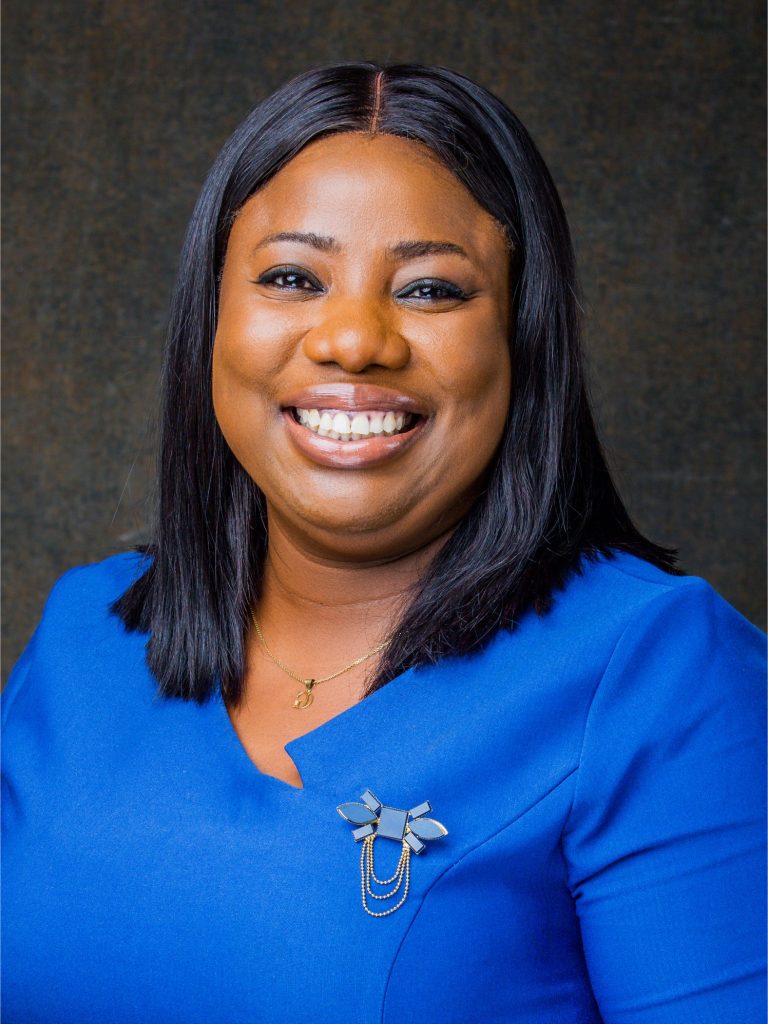
Dr Suleiman Ibrahim, CEO, FSDH Infrastructural Debt Fund
Dr. Suleiman Ibrahim is the CEO of FSDH Infrastructure Debt Fund, with over 20 years of experience in infrastructure finance, investment strategy, and public-private partnerships across transportation, energy, real estate, ICT, and ESG sectors.

A Certified Public-Private Partnership Specialist (CPPPS) with a Ph.D. in Environmental Management, he has led and advised on major projects including the Lagos Bus Mass Transit Reform, Lekki-Ikoyi Link Bridge, Lagos 4th Mainland Bridge, and Ibom Deep Seaport, working with institutions such as the World Bank, Access Bank, and key government agencies.

Contact us today at [email protected], 0201 700 8900, or visit www.fsdhaml.com to learn more.

Head, Internal Control

Paul Babatunde

BACKGROUND

Paul Babatunde is the Head of Internal Control at FSDH Asset Management Ltd. He has over 15 years of experience in the financial services industry. He began his career in 2008 as a Credit Processing Officer with the United Bank for Africa PIc. He later served as the team lead for Group Shared Services Helodesk and further moved through the ranks, serving in other capacities such as Fund Transfers, Payment Investigations Lead e.t.c. He joined Coronation Merchant Bank in 2016 as an Internal Control Officer and was later drafted to the Internal Audit division as a team lead in 2017, a position which he held until July 2019 when he joined Anchoria Asset Management Ltd as the Head – Compliance, Risk Management and Internal Control. He proceeded to Core Financial Group in 2020, where he served in the capacity of Group Head – Risk Management, Compliance and Internal Control, overseeing the activities of the Stock-broking, Asset management and DC subsidiaries of the group. Paul is a sponsored individual of the Securities and Exchange Commishion and holds a Bs in Accounting from the Lagos State University as well as the ISO 27001:2013 Lead Auditor certification as issued by the British Standards Institute.

Paul is a great achiever having led and delivered remarkably in his roles in the banking industry and capital markets. He has uncovered and resolved salient issues in his capacity within the Compliance, Risk Management and Internal Audit functions. He has also implemented several initiatives on process improvement, controls enhancement and risk management across various financial services institutions.

Head, Compliance

Adedayo Bello

BACKGROUND

Adedayo joined FSDH Asset Management team in 2021 as the Chief Compliance officer, where he coordinates all the regulatory and statutory Compliance of the Company. Prior to joining FSDH Asset Management Limited, he has worked with notable Financial Institutions within the Capital market.

He is a finance professional with over 15 years of experience in Investment Banking. He was Head Compliance at AIICO Capital Limited, and equally functioned as Internal Control Officer, Acting Team Lead, Investment/Treasury Operations, and member of a Reconciliation Team in the same organization.

He commenced his Financial Institution journey/career at United Capital Securities Limited, a subsidiary of United Capital PLC (Formerly UBA Capital) where he worked in various units like Operations, Reconciliation & Resolutions, and Business Development departments.

Adedayo holds a B.Sc. in Geology from University of Ado-Ekiti and Masters’ degree in Exploration Geophysics from Federal University of Technology, Akure. He is an accredited Compliance Officer with the Securities and Exchange Commission as Sponsored Individual.

Head, Operations

Chinedu Nnadi

BACKGROUND

Chinedu Nnadi holds a Bachelor of Science degree in Statistics from Nnamdi Azikiwe University, Awka, Anambra State. He is currently running his Post-Graduate Diploma in the University of Lagos, Akoka, Yaba, Lagos.

Chinedu is an Operations Specialist spanning over 17 (seventeen) years beginning from Union Systems Limited where he worked as the Systems Support/Analyst before joining the Operations Unit of Asset & Resource Management Co. Ltd (ARM Investment Managers). His time at ARM was one in which he was a key member of the Operations Unit where he was involved in organization-wide process improvement with his involvement in the Business Process Review (BPR) which identified inefficiencies and proposed improvements that led to timely execution of Strategic and Tactical transformation. This review greatly impacted on process efficiency, overall organizational effectiveness through transformation of resources, migration and adoption of relevant Information Technology tools for Operational efficiency.

He later joined Nova Asset Management Limited (NOVAMBL) as the Team Lead, Capital Market Operations where He was responsible for setting up of the Operations unit from the onset, from there, he joined FSDH Asset Management Limited where he currently sits as the Head of Operations.

Chinedu is vastly skilled and knowledgeable in the Nigerian Asset Management Operations and Regulations. Business Optimization, Process automation and Transaction processing, systems re-engineering. He is a driver of technology and operational initiatives.

He is happily married and has undergone professional trainings on Personal Improvements, Systems and Process Improvements, Financial Market Fundamentals.

Chief Investment Officer

Taofik Oyeniyi

BACKGROUND

Taofik Oyeniyi is the Chief Investment Officer at FSDH Asset Management Limited. He has over two and half decades of experience in the financial services industry across Treasury/Money market activities, Funds management, Balance Sheet and Liquidity Management, Business Development, Credit Analysis, and Structuring.

He started his Banking career in 1997 as an Executive Trainee at Equity Bank after a brief stint as an investment Officer at Compass Finance and Investment. He grew to the position of Chief Dealer before joining Intercontinental Bank as a Regional Head of Treasury in the Treasury and Investment Banking Division. In 2005. He joined Skye High Financial Services in 2010 as an Executive Partner and Division Head of Treasury and Funds Management. He worked in this capacity up until joining TAJ Bank as the Treasurer and Divisional Head of Treasury and Investment in 2019. He joined Radix Pension Managers in 2021 as the Divisional Head of Investment and Treasury.  He was responsible at Radix for formulating the overall Investment strategy for all funds managed, supervising Portfolio Managers in various investment activities, and ensuring funds are invested in line with asset allocation.

Taofik is a graduate of Business Administration and a holder of   MBA (Finance Major) degree from Obafemi Awolowo University, Ile-Ife. He is a Chartered Accountant (ACA), an Associate Member of the Chartered Institute of Bankers of Nigeria (CIBN), and a CFA Chartered Holder.

Chief Financial Officer

Funmilayo Oletubo

BACKGROUND

Funmilayo Oletubo is a finance professional with years of experience in business strategy, financial and performance management, liquidity management, operations control, risk management, taxation, project management and process optimization.

She is the Chief Financial Officer at FSDH Asset Management Limited “FSDH AM’”, where she acts as a strategic business partner for creating value and executing the firm’s financial strategies.

Before joining FSDH AM, Funmilayo started her career with Integrated Software Services Limited where she gained extensive knowledge for driving the efficiency of business with technology and financial solutions. She shortly after joined Chapel Hill Denham as an Investment Officer where she rose through the ranks to become an Assistant Vice President, finance and operations supporting the Investment Management, Securities Trading, Investment Banking and Trusteeship businesses. She was responsible for coordinating several responsibilities as: budget preparation, financial reporting and analysis, consolidated financial reporting, external audit liaison, management performance reviews, regulatory reporting, automation and system enhancement, asset and liability management, alternative fund accounting, investment accounting, standard operating policy development and compliance with the International Financial Reporting Standards {IFRS}.

She holds a BSc in Applied Accounting and Accounting from Oxford Brookes University, Glasgow, United Kingdom and Babcock University, Ilishan Remo, Nigeria respectively. She is a Fellow of the Association of Chartered Certified Accountants (ACCA), Member of the Institute of Chartered Accountants of Nigeria (ICAN) and Chartered Institute of Taxation of Nigeria (CITN).

She is happily married, passionate about socio-economic development and runs an NGO aimed at supporting the less privileged.

Head, Sales, FSDH Asset Management

Margaret Agbonlahor

BACKGROUND

Margaret joined the FSDH Asset Management team in 2020 as the Head of Sales, where she drives the various market segments; HNIs, Institutions and Retail. She has over 20 years of banking experience, with expertise in Sales, Business Development, Marketing and Portfolio Management. She is also an approved Corporate Client adviser. Before she joined FSDH, Margaret was a Team Lead for Core Banking Finacle Software Application change at Infosys, Bangalore India. She has garnered a deep understanding of the Fixed Income, Money Market and Equities Market, and attended several courses on Wealth and Portfolio Management. She holds a BSc. in Business Administration from the University of Benin and an MBA from the University of Lagos.

Non-Executive Director, FSDH Asset Management

Nike Ogunjimi

BACKGROUND

Nike is a finance professional with over 18 years of experience in investment management, financial advisory and commercial banking.

Over the span of her career, she has worked at several leading firms in the Nigeria financial services industry. She is currently a Director at Kuramo Capital Management where she focuses on investment management and investor relations activities. Prior to Kuramo, Nike was part of the Client Solutions team at Standard Chartered Bank Nigeria and provided financial advisory solutions to the bank’s local blue-chip clients.

She also worked at Afrinvest Limited and, as a senior member of the Investment Banking team, she led the execution of numerous headline M&A mandates for notable Nigerian companies. She was a member of the firm’s Management Team and had oversight responsibility for the Finance unit, alongside her investment banking duties.

Nike has also worked at ARM Investment Managers where, as part of the Investment Management team, she was responsible for covering various sectors on the Nigerian Stock Exchange as well as international financial markets. She holds a BSc. Insurance from University of Lagos, Nigeria and an MSc. Finance from University of Leicester, UK.

Managing Director, FSDH Asset Management

Toyin Owolabi

BACKGROUND

Mr. Owolabi has over 20 years of banking experience and is the Group Head of Financial Institutions, responsible for developing and managing the relationship with all non-bank financial institutions and other institutional clients. Before joining FSDH, he worked at FCMB and at different times oversaw Financial Institutions, Correspondent Banking and Structured Funding. He was also the Head of treasury at IMB international Bank. Mr. Owolabi’s educational background includes a bachelor’s degree in Agriculture from the University of Ilorin and an MBA from Business School Netherlands. He has attended numerous local and international courses and in addition to financial institutions, was responsible for wealth management and correspondent banking at FSDH Merchant Bank.

Non-Executive Director, FSDH Asset Management

Kelechi Okoro

BACKGROUND

Kelechi was at Argentil Capital Partners where he originated and executed infrastructure transactions. Prior to Argentil, he worked with the Infrastructure and Natural Resources Group of the International Finance Corporation (IFC), and at ARM Investment Managers (with ~USD 2bn AUM), both in Nigeria. He holds a Bachelor’s in Human Physiology from the University of Ibadan, and an M.B.A. from Lagos Business School. He serves as a Non-Executive Director.

Non-Executive Director, FSDH Asset Management

Yasmin Belo-Osagie

BACKGROUND

She was a border in England before proceeding to Princeton where she graduated cum laude in History (major) and Finance (minor) in 2011. She attended Le Cordon Bleu (a hospitality education institution), in Paris and London. She studied at Harvard Law School and at Stanford Graduate School of Business, graduating with a JD/MBA in 2019. After her graduation from Princeton, Belo-Osagie worked with McKinsey & Company as a business analyst till 2013. While at McKinsey & Company, she met Afua Osei with whom she co-founded She Leads Africa. She serves as a Non-Executive Director with FSDH Asset Management Limited.

Non-Executive Director FSDH Asset Management

Bukola Smith

BACKGROUND

Mrs. Bukola Smith holds an MBA from Alliance Manchester Business School, University of Manchester, U.K., and a B.Sc. in Economics from the University of Lagos. She is a Fellow of the Institute of Chartered Accountants of Nigeria (ICAN), an Honorary Member of the Chartered Institute of Bankers, and an Associate Member of the Certified Institute of Pensions (Nigeria).

She became the Managing Director/Chief Executive Officer of FSDH Merchant Bank in April 2021. She brings 29 years of progressive experience in the banking industry with a track record of strategic execution and leadership. Before her appointment as Managing Director, she was the Executive Director of Business Development at First City Monument Bank and held several other leadership positions since joining in 2006. She was responsible for the bank’s over 200 branches across the country, Public Sector, Business Banking, Agriculture, and Transaction Banking divisions. Under her, the bank’s SME-focused team, in three years, moved from 5th position in the industry to 1st position in 2019 (KPMG Customer Service Report 2020).

In addition, she established the FCMB Women in Business Desk (branded SheVentures), which supports female entrepreneurs, and set up FCMB Trustees and FCMB Custody. She was at some point the Divisional Head of Treasury, Divisional Head of Internal Audit, and also had responsibility for the Investment Banking and Registrar subsidiaries of the bank. Bukola also sat on the board of Legacy (now FCMB) Pension Funds Ltd., CSL Stockbrokers Ltd., and FCMB Trustees Ltd.

Prior to joining FCMB in 2006, she worked with FSB International Bank from 1992 to 2000 and Fidelity Bank Plc from 2000 to 2006, gaining experience in several areas of banking, including treasury operations, international trade services, foreign and local currency trading, bond trading, correspondent banking, and relationship management of non-bank financial institutions and private banking clients.

Bukola currently sits on the boards of Women in Successful Careers (WISCAR) and the Toyin Oni Foundation (an NGO for cancer awareness). She serves as a mentor to several young women within and outside these networks.

Chairman, FSDH Asset Management

Folashade Laoye

BACKGROUND

She is a graduate of University of Lagos (BSc Accounting, 1990) and qualified as an Associate member of the Institute of Chartered Accountants of England and Wales in 1995 and the Institute of Chartered Accountants of Nigeria in 1997. She trained with Coopers & Lybrand, UK (now PricewaterHouseCoopers) from 1991 to 1995 and worked with the Corporate Finance Unit of First Securities Discount House (“FSDH”) from 1995 to 1997. She holds a Master of Business Administration from Harvard Business School. She has been instrumental in charting the growth strategy of Hygeia for several years. She serves as the Chairman of the FSDH Asset Management Limited Board of Directors.